

Nationwide shortages of special education teachers continue to affect schools across the country, including those in Nebraska. When special education teachers leave their districts, they take not only their professional expertise, but also the meaningful relationships they have established with students, families, colleagues and school communities. The departure of these educators can have significant implications for student growth, achievement, continuity of services and school finances.
Nebraska school administrators must take a proactive and strategic approach to retaining special education teachers. Two data-driven decision-making tools are available to support efforts to improve teacher retention and reduce vacancies: the Statewide Special Education Retention Data System and the Nebraska Teacher Vacancy Report. These resources provide districts with valuable information to guide informed decision-making. Together, the reports offer schools a comprehensive view of current trends in special education teacher retention and vacancies across the state.
Data sources
Statewide Special Education Retention Data System
The Nebraska Special Education Retention Data System (SRDS) provides a comprehensive picture of special education teacher retention across the state. Similar to a landscape, retention data includes multiple focal points that must be examined together to understand the broader context of teacher attrition.
The Statewide Special Education Retention Data System was established through a collaboration between the University of Nebraska–Lincoln’s Nebraska Center for Research on Children, Youth, Families, and Schools (CYFS), the Academy for Methodology, Analytics, and Psychometrics (MAP Acadmey) and the Nebraska Department of Education (NDE) Data Management and Application Development team
.
For this data collection, school systems are asked to report information on special education-coded positions that were vacated at the end of the school year, along with the specific reason for each departure. Data are collected annually each spring for the previous school year. For example, the spring 2026 data collection reflects the retention and movement of special education teachers at the end of the 2024–25 school year.
In the most recent collection, more than 283 districts reported data for 3,603 teachers. These teachers served under 4,841 special education position codes. As a result, the reported figures are based on the number of position codes rather than the number of individual teachers.
Using information collected through the SRDS, the Get SET Nebraska team developed a comprehensive summary of special education teacher retention in Nebraska.
The following summary focuses on these key areas:
- Statewide retention and acceptable thresholds.
- Retention by region.
- Retention by Educational Service Unit (ESU) service area.
- Retention by position and years of service.
- Reasons special education teachers are not retained.
- Potential solutions by endorsement area.
Data ANALYsIS
One-year teacher retention data were summarized quantitatively using descriptive statistics, including means, standard deviations, frequencies and percentages. The retention rate was calculated as the percentage of special education positions held during the 2024–25 school year that remained within the same district for the 2025–26 school year.
Retention rates were analyzed at the statewide level and further examined across several categories, including region (Central, Metro, Northeast, Southeast, West Central, and Western),ESU, district size by student enrollment, position type by IDEA coding and years of service. Frequencies and percentages were also calculated to describe the reasons special education teachers reported for leaving their positions.
Reporting categories for the 2026 report are as follows:
- Statewide Retention
- Retention by Region
- Retention by School Size
- Retention by ESU Service Area
- Reasons not Retained
Retention Category Thresholds
Understanding state, regional and local data is critical for improving special education teacher retention. Current SRDS data are publicly accessible to stakeholders through the Nebraska Education Profile (NEP) on the NDE website.
Schools that completed the data collection process in the portal have access to district- and school-specific special education retention data. Overall retention percentages reported reasons for leaving, and trend data are available within each district or school’s NEP. These data can help districts identify patterns, compare retention outcomes and learn from districts or regions demonstrating higher retention rates.
Indicators, or thresholds, have been established to provide a quick measure of a district’s retention health. District teams can monitor retention data within their profile and determine their status within the threshold system.
Retention thresholds have been established as follows:
- Targeted: 75–100% retained
- Approaching: 50–74% retained
- Below Target: 0–49% retained
STATEWIDE SPECIAL EDUCATION RETENTION DATA SYSTEM
A recent article from the Learning Disabilities Association of America reports that 15% of special education teachers leave their positions each year (Gilmour et al.). Recent Statewide Special Education Retention Data System (SRDS) reports from 2024 and 2025 indicate that Nebraska schools are meeting or exceeding national retention averages for special education teachers. This was also shown to be the case in the 2026 report with 86.74% of teachers retained statewide.
In 2026, 283 districts completed the SRDS, identifying special education teachers who remained in their districts from the 2024–25 school year to the 2025–26 school year. The data indicate that special education teacher retention rates in Nebraska have remained relatively stable compared to the 2024–25 report. Overall, the 2026 data shows a non-retention rate of 13.26%. While this rate is positive compared with national figures, it still indicates that 642 positions were vacated.
Retention concerns appear to remain steady across the state, but notable variations persist. Districts must continue to examine statewide, regional and local data to sustain and strengthen this positive trend.
Retention Rates by Region
Over time, retention rates have shown relatively little variation across regions. This differs from findings reported in the Nebraska Teacher Vacancy Survey (NTVS), which identifies regional differences in open and unfilled positions. However, the NTVS focuses specifically on vacancies, and these figures may include newly added positions, staffing changes, or positions that were not filled by fully licensed candidates. While the survey demonstrates notable regional differences in vacancies, the 2026 SRDS provides additional context by focusing specifically on teacher retention.
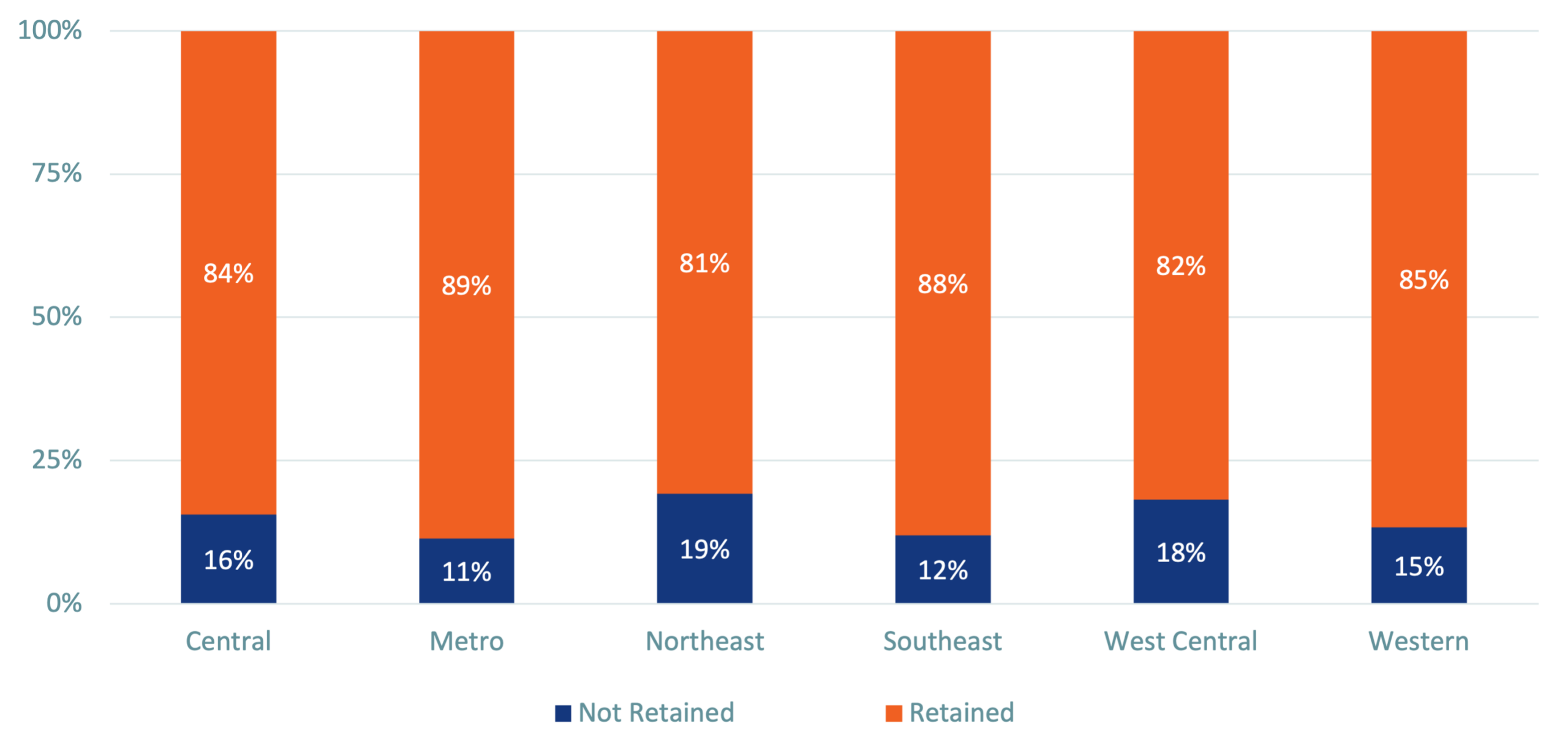
When examining SRDS retention rates, retention levels remain relatively consistent across regions. Similar to the 2023–24 and 2024–25 reports, the 2025–26 retention data indicate that non-retention occurred at a relatively even rate across regions, with an average non-retention rate of 15.21% (see Figure 1). In other words, each region experienced the loss of approximately 11.4% to 19.2% of its special education teacher population.
Higher retention rates were reported in the Metro and Southeast regions, with rates ranging from 88.6% to 88.1% (See Figure 1). In contrast, the Northeast and West Central regions demonstrated the highest levels of non-retention, at 80.8% and 82.1%, respectively. Increased non-retention was also observed in the Northeast and Central regions, with rates approaching 20% (see Figure 1). Although these differences are relatively modest, they may suggest emerging regional trends. Continued monitoring over time will be important to determine whether these patterns remain stable or shift in future reporting years.
Figure 1
Retention Rates by Region
Retention Rates by District Enrollment Size
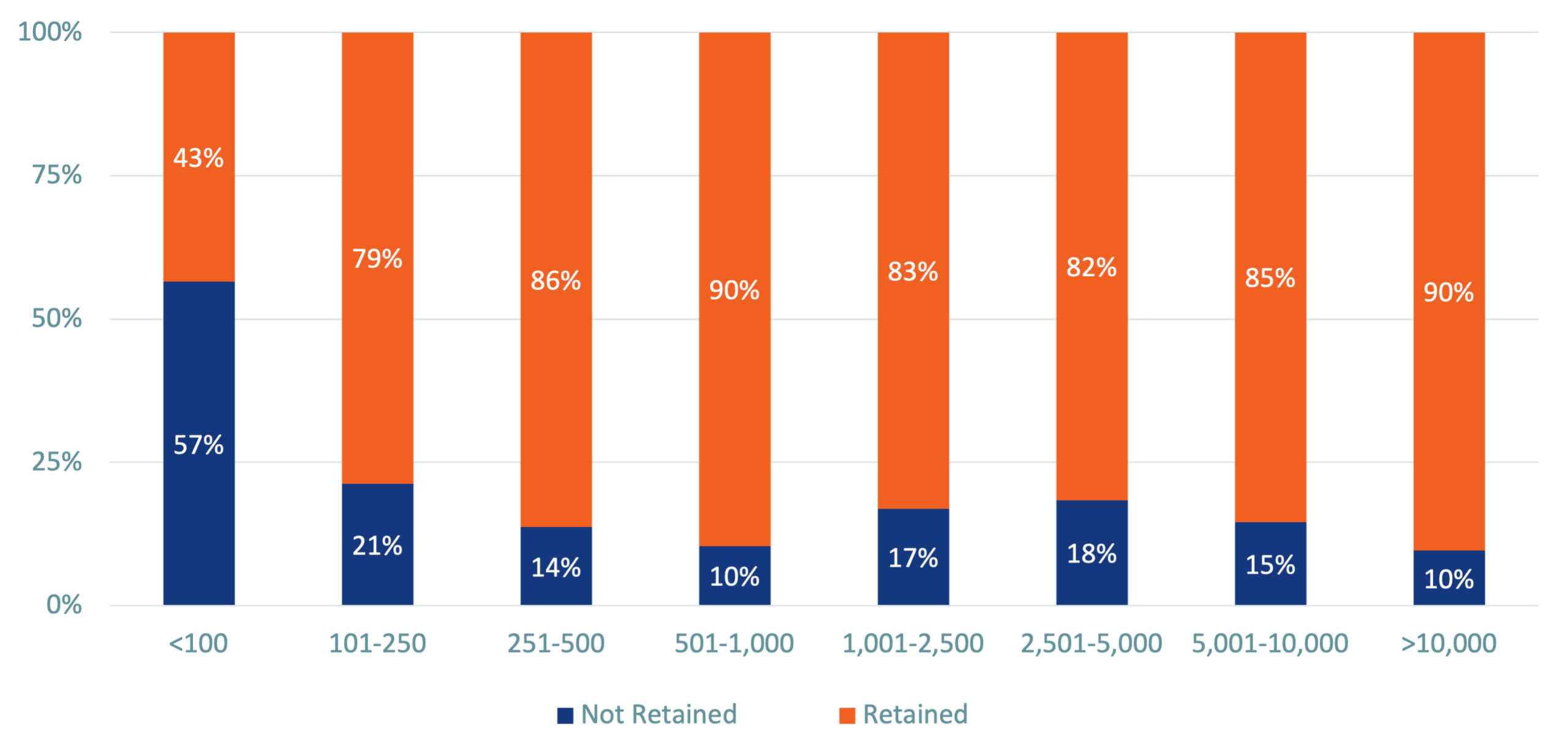
When examining special education teacher retention by district size, several differences emerge. In previous years, districts with fewer than 100 students retained special education teachers at higher rates than many of their larger counterparts. However, SRDS 2026 data indicate a notable decrease in retention among these districts. In the previous year, districts with fewer than 100 students retained 92.3% of special education teachers; however, the most recent data show a decrease to 43.5% retention (see Figure 2).
The reason for this substantial shift is not yet known. One possible explanation is that special education teachers in very small or rural districts may be coded under multiple special education positions. As a result, when a teacher leaves, multiple position codes may be reported as vacated or non-retained, which could lower the reported retention rate. It is also possible that smaller districts were unable to offer retention incentives and other hiring incentives when compared to larger districts.
Apart from this notable change, retention rates remain relatively stable when compared across district size categories. Districts with 500–1,000 students and districts with more than 10,000 students demonstrated slight increases in retention, with rates ranging from approximately 89.5% to 90.4% (see Figure 2).
Although the reasons for these increases are unknown, they may be connected to districtwide strategic planning efforts, retention incentives, or program implementation. The current survey does not assess the specific strategies districts use to support teacher retention. Future analyses comparing district retention plans, incentives, and support programs may provide additional insight into the factors driving changes in retention across district-size categories.
Figure 2
Retention Rates by District Enrollment Size
Retention Rates Across ESU Service Area
Nebraska is served by 17 ESUs, each supporting school districts within designated regions of the state. The support provided by ESUs varies based on member school needs, regional priorities, and strategic development initiatives. ESUs may assist member districts with retention planning when teacher retention is identified as a local or regional focus area.
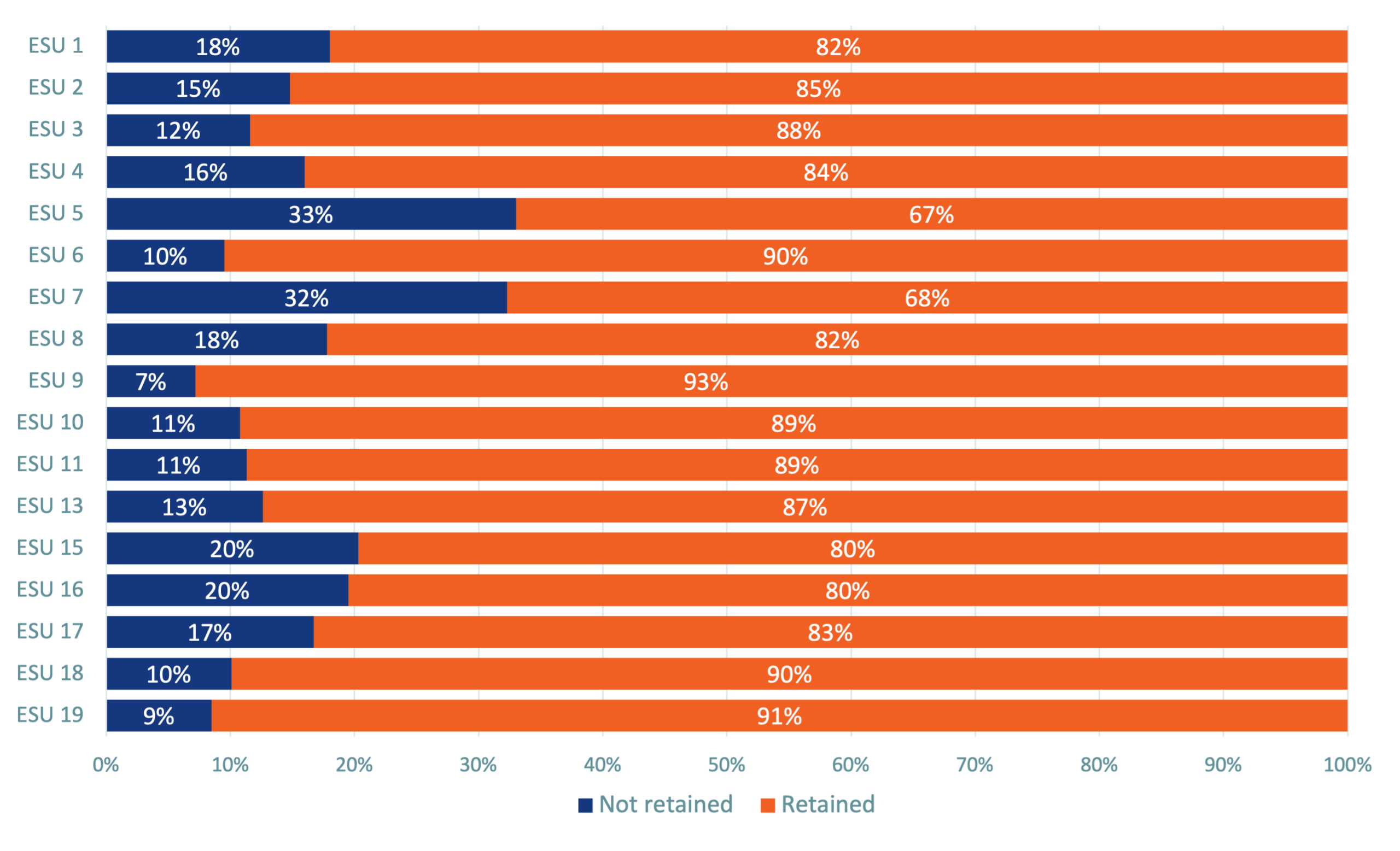
Current findings indicate that special education teacher retention rates within ESU boundary areas continue to vary considerably, ranging from 67.7% to 92.8% (see Figure 3). Several ESU boundary areas reported retention rates at or above the statewide average of 86.7%. Notably, three ESUs recorded retention rates above 90%: ESU 6 at 90.5%, ESU 9 at 92.8% and ESU 19 at 91.5%.
Two ESUs (ESU 5 and ESU 7) demonstrated significantly reduced retention rates in comparison to previous years. All ESU boundary areas with retention rates below 74% may benefit from additional data collection and analysis to better understand the local factors influencing special education teacher retention.
Examining SRDS data through the Nebraska Education Profile may help identify reported reasons for non-retention within these regions. A closer review of the data by ESU boundary area may also help identify contributing factors and guide the development of targeted supports for districts experiencing lower retention rates.
Figure 3
Retention Rates by ESU
Retention by Position and Time in Service
Position
Special education includes a variety of position codes, with students receiving services across a range of instructional settings. Some positions require specialized education and licensure, and certain specialists may serve students across district, regional or ESU boundaries due to the nature of their expertise. In addition, staffing needs for some positions are often influenced by student enrollment and individual student needs, which may shift over time and contribute to differences across specialty categories.
For the purposes of this report, all position codes were collapsed into the following general teaching code areas:
- Collaborating/Co-Teaching
- Core Academic/Alternative Standards/Assessment
- Core Academics/Grading
- Facilitator
- Teacher–Early Childhood Special Education
- Teacher of the Deaf or Hard of Hearing–Early Childhood Special Education
- Teacher of the Deaf or Hard of Hearing–School Age Special Education Staff Funded by IDEA Grants
- Teacher of the Deaf or Hard of Hearing–Special Education
- Teacher of the Visually Impaired–Early Childhood Special Education
- Teacher of the Visually Impaired–Special Education
When comparing teaching positions and codes, the 2026 SDRS report indicates relatively few differences across categories. All position code areas demonstrated retention rates above 80%, except for Teacher of the Deaf or Hard of Hearing–Early Childhood Special Education, which had a retention rate of 70.4% (see Figure 4).
Overall, retention rates for specialist positions remained generally stable. Teachers of the Visually Impaired–Special Education and Teachers of the Deaf or Hard of Hearing–Special Education typically maintained retention rates ranging from 87.9% to 100% (see Figure 4). However, the Teacher of the Visually Impaired–Early Childhood Special Education category was an outlier in the 2025 report, with a retention rate of only 57%. Although this position code remains lower than other specialist categories, the 2026 data show an increase in retention to 70.4% (see Figure 4).
When examining broader teaching areas, including co-teaching, alternative standards, and core academics, few differences were observed in the 2026 data. This is important to note because the 2025 report indicated a difference of approximately 10% to 15% across these categories. The current findings suggest greater consistency in retention across these teaching areas.
The reasons for lower retention rates among early childhood specialist categories are not yet known. One possible explanation may be related to coding changes associated with fluctuating student numbers or transitions from early childhood programs to school-age services.
Time in Service
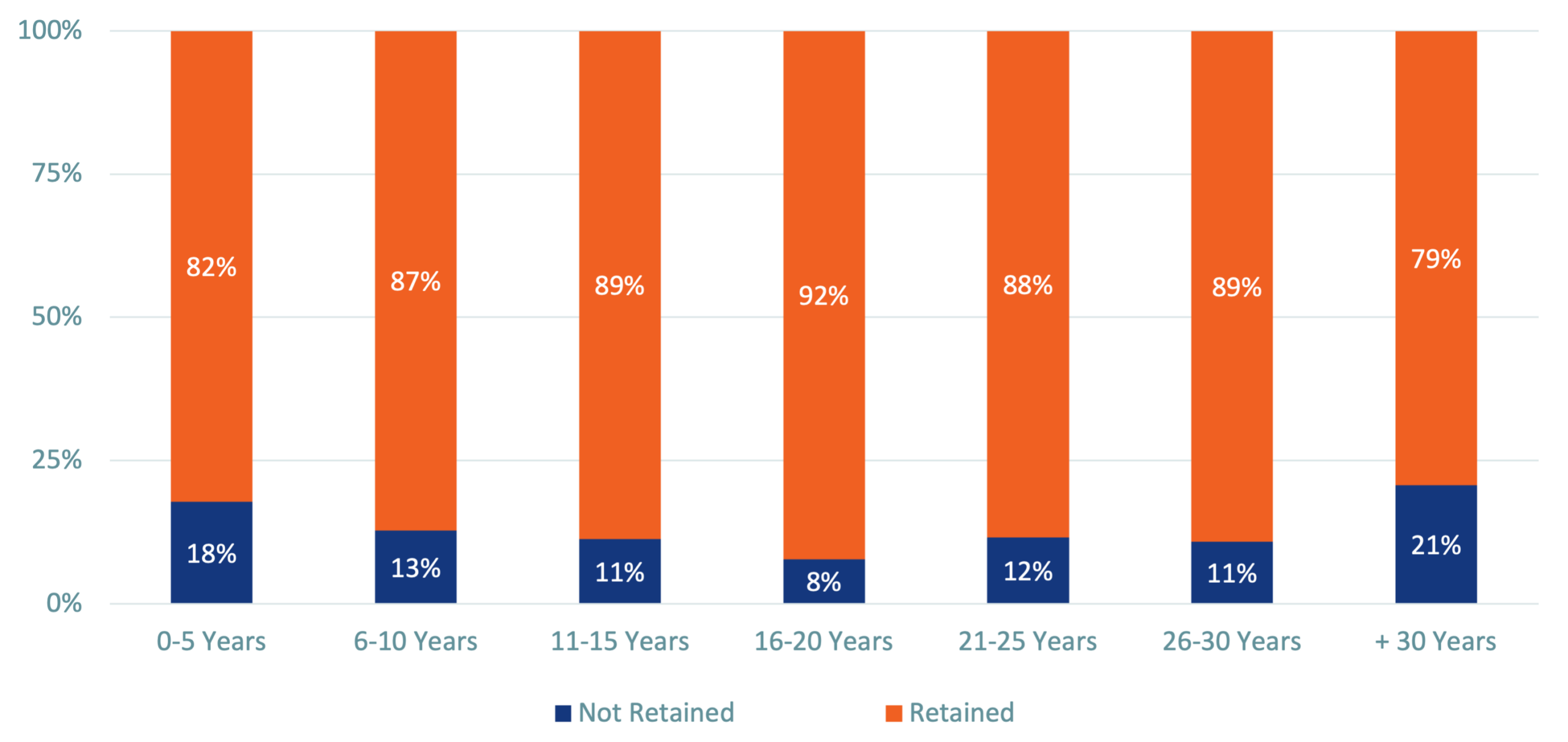
A recent TEACH+ document identified that 50% of special education teachers leave their positions within the first five years of service. Examining retention by years of service can help Nebraska districts better understand which groups of teachers are leaving and where targeted supports may be needed.
The 2026 data indicate that non-retention rates are relatively similar across most years-of-service categories, with retention rates generally ranging from 82.2% to 89.2% (see Figure 5). However, two exceptions were noted. Teachers with 16–20 years of experience were retained at the highest rate, with 92.2% retained and only 7.8% leaving. This represents a 50% reduction in non-retention compared to the 2025 report.
Teachers with more than 30 years of service demonstrated the lowest retention rate, with 20.7% leaving their positions (see Figure 5). Although this percentage is higher than in other categories, it represents a 9% decrease from the 2025 report. This pattern may be explained, at least in part, by retirement eligibility, as many teachers become eligible for retirement after approximately 30 years of service.
When excluding teachers with more than 30 years of experience, novice teachers with 0–5 years of service left at higher rates than many of their peers. Specifically, 17.8% of teachers in the 0–5 year category left their schools (see Figure 5). The loss of early-career teachers is significant, as these educators often bring enthusiasm, innovative instructional approaches, and fresh perspectives to the profession.
Figure 4
Sped Teacher Retention Rates by Position
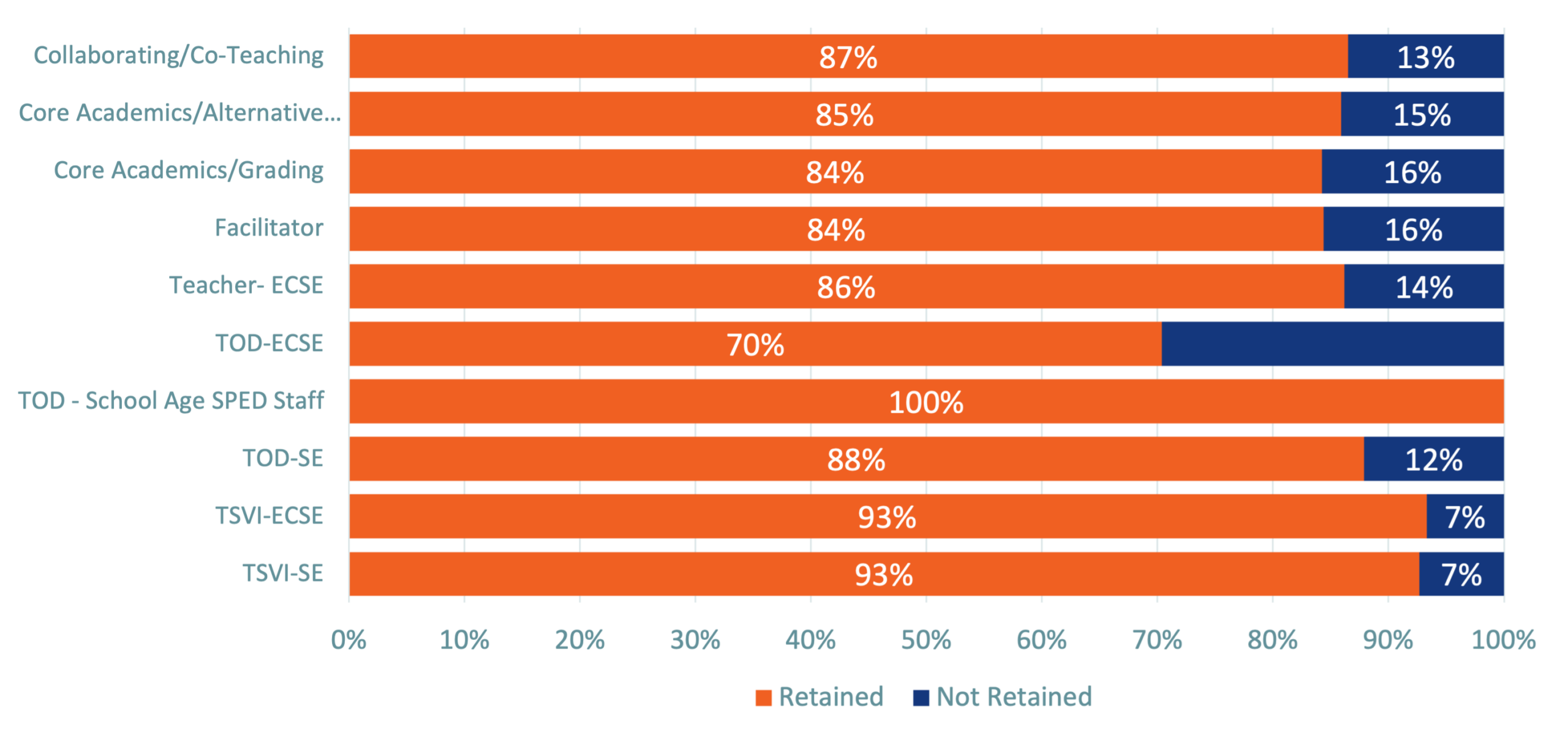
Figure 5
Retention Based on Years of Experience
REASONS TEACHERS LEAVE
Districts were asked to document the reasons teachers leave. The team identified 11 categories to help districts identify why teachers leave:
- Changes to Another Position
- Contract Not Renewed
- Disciplinary Issue
- Family Care Responsibilities
- Health/Deceased
- Job Abandonment
- Leave of Absence
- Left the Field of Education
- Moved to Another District
- Retirement
- Other-Recommended Description
By documenting the reasons teachers resign, districts can identify trends leading to actionable steps for improvement.
Overall Reasons
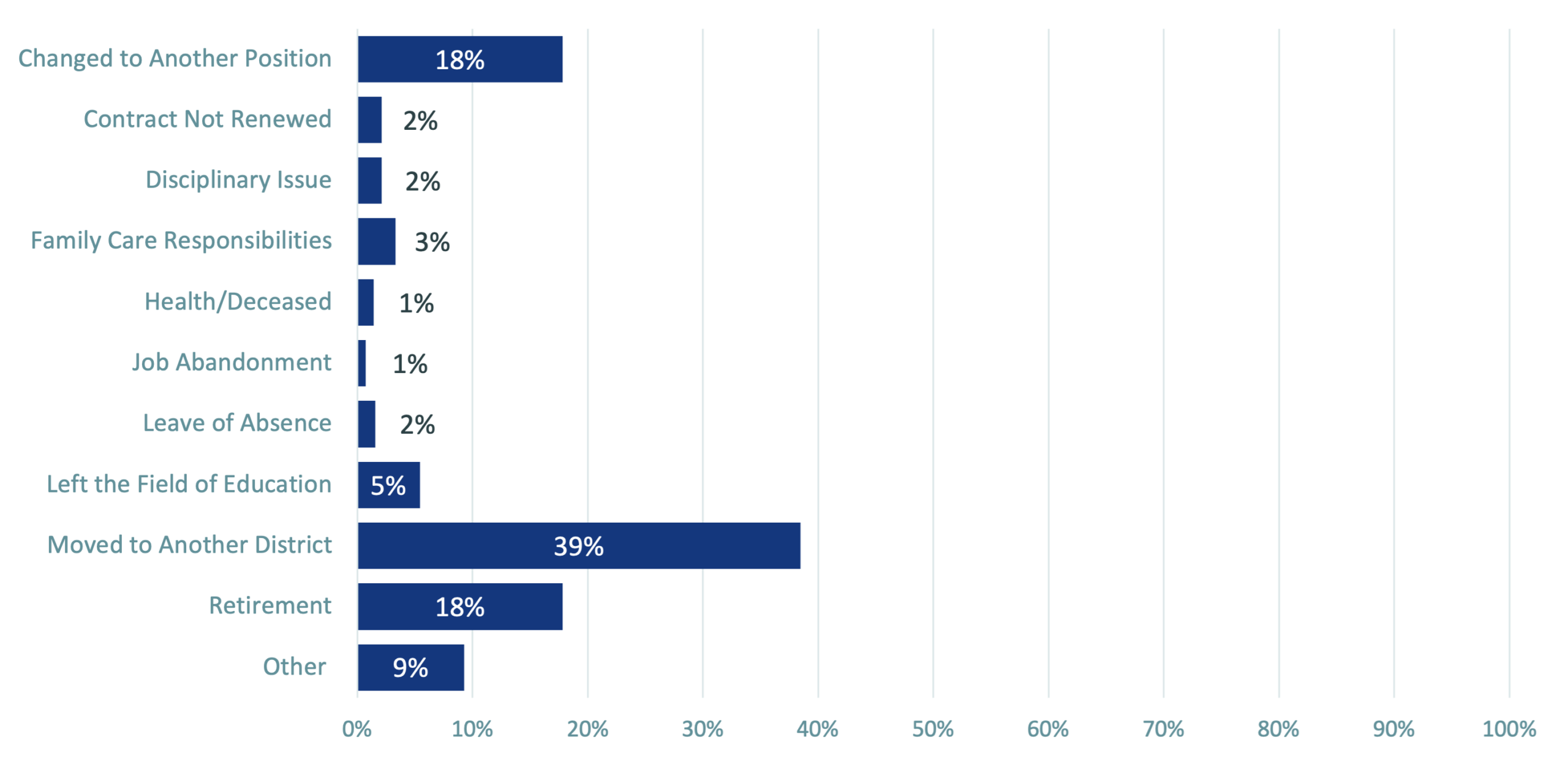
Retirement is a natural and expected part of the education workforce and can affect overall retention rates in ways that may not be preventable. The 2026 data collection indicates that 17.0% of vacated special education positions were related to retirement. However, further analysis suggests that retirement was not the primary factor contributing to non-retention. In fact, 82.9% of positions were vacated for reasons other than retirement (see Figure 6). This finding suggests that regional, district, and local analyses may be helpful for monitoring and better understanding the reasons special education teachers leave their positions.
It is also important to note that reported reasons for leaving have shifted over time. Differences are evident across the 2024, 2025 and 2026 data collections. In the 2024 report, the most common reason teachers left their positions was to transfer within the district. However, the 2025 and 2026 data collections identified “Moved to Another District” as the most frequently reported reason for leaving. In the 2026 data, 38.5% of teachers who left moved to another district following the 2024–25 school year (see Figure 6). In comparison, teachers transferred to other positions within their districts only 17.8% of the time.
This shift may suggest that teachers are seeking opportunities in other districts that could offer different supports or incentives, such as a more positive school culture, reduced caseloads, retention benefits, sign-on bonuses or other working conditions. While the current data do not identify the specific reasons teachers moved to other districts, this trend may warrant additional examination.
An additional point to examine is the data relating to those who left the field entirely with an increase to 5.4% and the number of teachers who abandoned their positions saw an increase at 0.7% (see Figure 6). It is possible that the number of teachers leaving the field is higher, as some cases may have been reported in the “Other” category, which accounted for 9.3% of departures. In addition, the number of teachers leaving due to non-renewal or disciplinary reasons has increased slightly over the past three years. Although these categories account for a smaller proportion of overall departures, their continued increase may warrant closer monitoring.
To provide additional context, this report also includes an examination of reasons for leaving by region and district size.
Figure 6
Reasons Not Retained
Reasons by Region
When examining reasons for teacher departure by region, several differences were observed. The percentage of teachers who moved to another district ranged from 14.2% in the Southeast region to 38.2% in the Central region. The percentage of teachers coded as “Changed to Another Position” also varied across regions, ranging from 5.7% in the West Central region to 20.7% in the Western region. Similarly, the percentage of teachers reported as having “Left the Field of Education” ranged from 2.6% in the Northeast region to 8.6% in the West Central region.
The reasons for these regional differences are not yet known. Variation may be related to geographic distance between districts, school staffing structures, regional workforce conditions, local culture, or other factors not captured in the current data collection. A more detailed examination of district-level reasons for departure through the Nebraska Education Profile may help schools and regional partners better understand local retention concerns and identify areas where additional support may be needed
Reasons by District Size
Differences were also observed when examining reasons for leaving by district size. These differences were most evident within the “Changed to Another Position” and “Moved to Another District” categories.
Teachers were more likely to move to another district if they worked in districts with 1,001–2,500 students, with 24.7% of departures falling within this category. Districts with 2,501–5,000 students and 5,001–10,000 students did not report a significant number of teachers changing positions within the district; however, they did report a higher percentage of teachers moving to other districts, at 43.8% and 35.7%, respectively.
Although these figures do not provide a complete explanation for teacher non-retention, they highlight the importance of examining district-level data to better understand the primary reasons teachers leave. Districts may benefit from reviewing policies and practices related to internal position changes, special education staffing structures, caseload expectations, and other working conditions that may influence teacher retention.
RECOMMENDATIONS
Special education teacher turnover can be costly for districts, both financially and in human capital. Experienced teachers who leave their districts take their expertise and collaborative relationships with them. The loss of these skills can negatively impact student growth. It is crucial for districts to begin retention planning
Recommendations to promote district special education teacher retention rates are as follows:
1. Monitor Trends in State and Local Retention Data.
Districts should continue to evaluate their individual retention data collected through the Nebraska Department of Education, as well as relevant internal district data. This evaluation should extend beyond overall retention rates and include a closer examination of regional, district, and school-level factors that may contribute to turnover. Administrators should analyze reported reasons for non-retention and use these findings to develop targeted strategies that address identified needs.
Data from the Statewide Special Education Retention Data System are readily available through the Nebraska Education Profile. Districts can examine these data at both the district and school levels. Monitoring three- and five-year trend data is especially important for identifying local patterns that may inform potential solutions to retention concerns. When combined with local human resources data, exit interviews and stay interviews, these data can provide districts with a more complete understanding of their special education retention status.
Phase 3 of the Get SET Nebraska Induction and Mentorship Program was designed to support administrators in this work. Using the Cult of Pedagogy’s “Gut-Level Reflection” process, administrators are guided in examining how specific aspects of special education positions may influence teacher experiences, perceptions, and stressors. Administrators are also provided with resources to assess the climate and culture experienced by special education staff members.
These tools can help administrators identify areas of strength, recognize emerging concerns and develop more responsive supports to improve special education teacher retention.
2. Develop a Local/District Data-Based District Retention Plan.
Data available through the NEP allow schools and districts to identify their special education retention thresholds and use those thresholds to guide decision-making. If a district identifies a significant decline in retention or is categorized as “Approaching” or “Needs Improvement,” district leaders may consider using the Get SET Nebraska Administrative Leadership Academy (ALA) tools to support the development of a district retention plan.
The ALA guides administrators through a structured process of learning, reflection, and planning. Participants develop retention plans through four learning modules designed to support thoughtful analysis of local data and retention needs. Activities and guiding questions help administrators focus their reflection on key components of retention planning, including team development, goal setting and identification of strategies to support special education teachers.
Through this process, administrators can build retention teams, establish measurable goals, and create action steps aligned with district needs. ALA materials are available at getsetnebraska.org/program.
3. Adopt a Comprehensive Induction and Mentorship Program Like Get SET Nebraska.
As noted above, many special education teachers are moving to other districts within Nebraska. Although teacher movement between districts still represents a loss for the original district, it also suggests that many educators are choosing to remain in the field. This is an important distinction because district-level factors may be within the control of local leaders. Teachers may leave a district for a variety of reasons, including geographic factors, local policies, school culture, job expectations, perceived support and other factors not captured in the current data.
Districts can take a proactive approach by supporting new special education teachers through a comprehensive induction and mentorship program, such as Get SET Nebraska. Teachers who completed the program as part of the 2023–24 scale-up study demonstrated higher levels of job satisfaction and a stronger intent to remain in the field compared to their non-program peers.
The Get SET Nebraska program offers three phases of support for special education teachers within their first three years of service. These teachers, referred to as mentees, are paired with local mentors who are intentionally matched based on grade level, content area, and caseload. Together, the mentor, mentee, and administrator follow a structured mentorship plan that may last one or two years. During this time, participants engage in guided activities to support the mentee’s professional growth and access individualized professional development opportunities.
Three program options are available for districts to support teachers:
- One-Year Program
- Two-Year Program
- Level III Outside Placement Contracted Teachers Program
Many Nebraska districts are already implementing effective mentoring and induction practices within their schools. However, these programs may not always include content specifically designed to address the unique needs of special education teachers. Get SET Nebraska can be integrated into existing district systems, allowing teams to use the full program or select specific components to address identified gaps.
As a starting point, districts may consider completing the Comprehensive Induction and Mentoring Checklist. This reflection tool allows administrators to examine their current mentoring and induction practices, identify gaps and select Get SET Nebraska resources that align with local needs.
District teams are encouraged to consider implementing the full Get SET Nebraska program, as it was designed to include the critical elements of comprehensive special education mentoring and induction. However, it might be possible to use portions of the program if the district already covers key elements.
Districts interested in learning more about available resources and implementation options can visit getsetnebraska.org.
4. Plan and Conduct Stay Interviews.
When addressing concerns related to teacher retention, it is also important to consider teachers’ future intent to stay. Although intent-to-stay data are not included in Nebraska’s Statewide Special Education Retention Data System, this concept remains relevant when examining retention. Strategically addressing factors that influence teachers’ intent to remain in their positions can help districts create more stable support systems for Nebraska students.
Engaging in ongoing conversations with staff is critical for understanding their sense of connection, satisfaction, and support within a district. One structured approach districts may consider is the use of stay interviews. According to Education Week, stay interviews are conversations conducted during the school year with employees whom leaders want to retain. The article notes that stay interviews may contribute to retention rates as high as 90%.
Stay interviews are most effective when they involve meaningful and intentional conversations. Not every staff member needs to participate; instead, administrators may choose to identify key individuals or groups whose retention is especially important. Questions should explore why employees choose to stay, what factors contribute to their satisfaction and what conditions might cause them to consider leaving. It is also important for administrators to follow up on concerns raised during these conversations, as the effectiveness of stay interviews depends on whether staff see that their feedback leads to action.
Administrators may find additional guidance and sample stay interview questions through the Society for Human Resource Management (SHRM).
5. Rethink Special Education Position Structure
Many teachers who leave their positions for reasons categorized as “Other” may be experiencing circumstances beyond their control. While retention may not be possible for every teacher, some educators may remain in the profession if districts are willing to think creatively and reconsider traditional position structures.
Adapting and adjusting roles may be an important strategy for retaining special education teachers, particularly when personal or family circumstances affect their availability. Ongoing communication with teachers is essential for understanding their needs, concerns, and capacity to continue working. Some educators may assume that full-time employment is their only option when alternative arrangements may allow them to remain connected to the district. Through conversations, stay interviews, and individualized planning, school districts may develop targeted strategies to encourage teachers to continue serving students, even on a part-time basis.
Options such as job sharing, reduced schedules, flexible assignments, or specialized service roles may be especially helpful for teachers who leave due to family care responsibilities, extended leaves of absence, or other personal circumstances. Even if a teacher is able to remain for 10–12 hours per week, conduct home visits, provide in-home services, or support extended school year services, their expertise continues to provide value to students, families, and districts. Maintaining this connection may also increase the likelihood that teachers return to full-time roles in the future.
Access the Get SET Nebraska Induction and Mentorship program at getsetnebraska.org.