

During the 2023-24 school year, 39 new special education teachers — mentees — participated in the Get SET Nebraska Induction and Mentorship Program. Each teacher was supported by a dedicated mentor and school administrator who committed their time, expertise and encouragement. Their year-long journey required them to complete all three phases of the program.
- Phase 1: Assists new teachers in preparing for the new school year. Mentees, mentors and administrators completed several activities allowing them to identify elements related to special education ethics, communication, policy and procedure, caseload components and available resources. The culmination of this phase ended with the creation of a resource binder to empower them throughout the year.
- Phase 2: New special education teachers explore the High-Leverage Practices in Special Education, set yearly professional development goals and create a classroom observation schedule. They also are supported through weekly meetings with their mentor and monthly induction meetings with their administrator and mentor. Important information is disseminated, problem solving is supported and new skills are developed.
- Phase 3: Reflection is a large part of any process, and team members spend Phase 3 identifying their “gut reflections” from the year and celebrating their growth. Administrators are led through a climate and culture activity and end the year celebrating with their teams.
Executive report
PARTICIPANT PERCEPTIONS
The 2023–24 evaluation of the Get SET Nebraska program gathered feedback from 13 participants, who included administrators, mentors and mentees involved in special education teaching. The purpose of the interviews was to assess participants’ perceptions of the program, including its utility, acceptability and any barriers or challenges they may have encountered.
Sentiment by Group
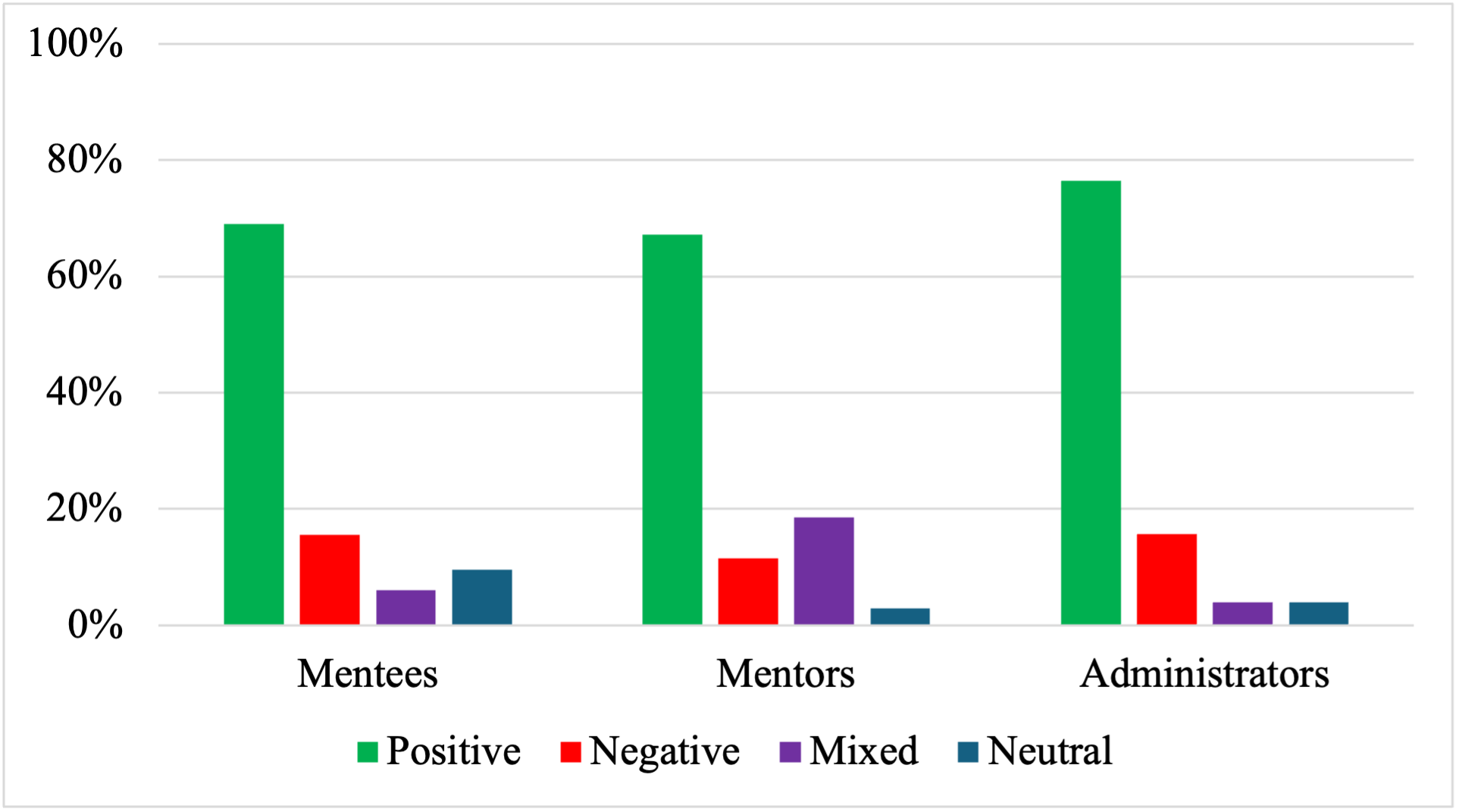
As shown in Figure 1 (below), overall sentiment was largely positive across all three participant groups, though some negative and mixed feedback was also noted.
Figure 1
Sentiments Coded Across Groups Interviewed
Sentiment by Topic
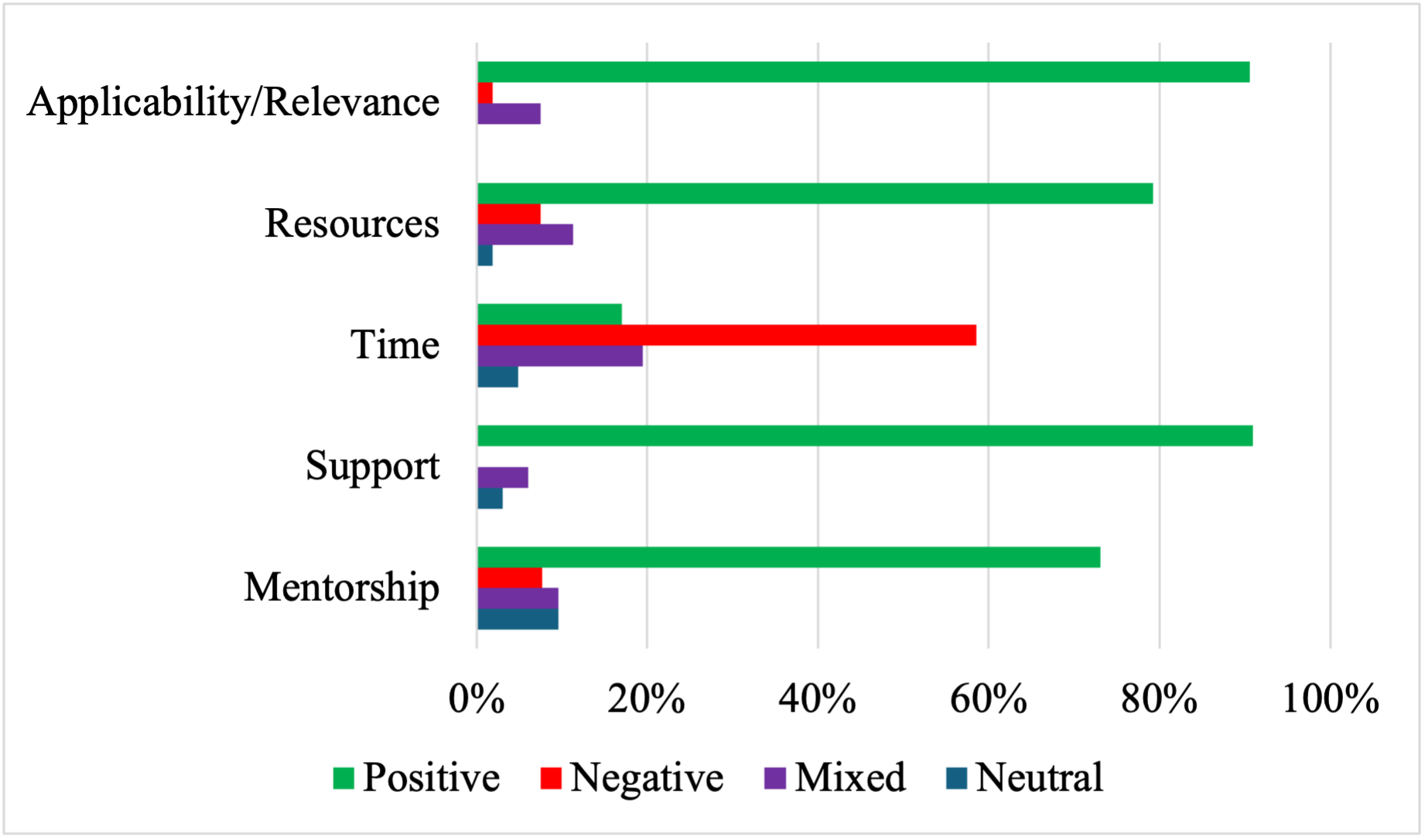
The top challenge participants identified was difficulties related to scheduling and time management, as illustrated in Figure 2, with time having the most negative comments associated with it compared to the other topics. The primary contributor to this negative sentiment was participants’ difficulty in balancing the program’s demands with other responsibilities. However, this highlights broader challenges within special education rather than shortcomings of the Get SET program.
Regarding its applicability and relevance, Get SET was seen as strongly aligning with participants’ professional roles and responsibilities. Mentees highlighted the program’s support for workflow management, mentors underscored its contributions to their own professional development, and administrators recognized its role in building broader school-wide instructional and organizational capacity.
The mentorship component of Get SET was well-received, with participants appreciating frequent and flexible meetings that fostered supportive relationships. On top of the support through the mentorship, support from Get SET, specifically from project manager Pam Brezinski, received highly positive feedback for accessibility, responsiveness and proactive engagement, enhancing participants’ experiences.
Additionally, resources provided by the program were generally praised for practicality and ease of integration, though some suggested incorporating digital tools for greater efficiency.
Figure 2
Sentiments Coded Across Topics
Recommendations
Recommendations for future improvements included offering program materials earlier to allow adequate preparation, extending program duration for sustained mentoring, providing materials in both digital and printed formats, and facilitating greater collaboration and networking opportunities among participating districts. Taken together with the mostly positive feedback, these suggestions underscore a shared desire to continue the program with slight improvements and demonstrate that Get SET is overall perceived as beneficial and effective.
Recommended Citation
Chavez, A., Yoon, H., Brezenski, P. & Witte, A. L. (2025). Get SET Nebraska Participant Perceptions: Utility, Acceptability and Barriers [blog]. https://getsetnebraska.org/blog.